Investigating Certification Timelines and Their Effect on Reward Rollout Schedules Within App Ecosystems for Regulated European Gaming Markets
Lars Becker · Oct 10, 2026

Investigating Certification Timelines and Their Effect on Reward Rollout Schedules Within App Ecosystems for Regulated European Gaming Markets
Certification processes in regulated European gaming markets require operators to submit app updates through multiple layers of review before rewards and promotional features reach users, and these steps directly shape rollout schedules across app ecosystems. Regulatory bodies in countries such as Germany, Sweden, and the Netherlands demand verification of random number generators, payment integrations, and player protection tools, while each stage adds documented time to the overall cycle.
Core Elements of Certification Procedures
Software providers submit builds to accredited testing laboratories that evaluate compliance with technical standards for fairness, security, and responsible gaming features. Laboratories issue reports that operators forward to national authorities, and the combined sequence often spans several weeks to months depending on jurisdiction and complexity of changes. When a new reward mechanism enters the update, such as time-limited bonus credits or loyalty multipliers, the entire feature set undergoes re-examination to confirm it does not circumvent existing limits on player exposure.
Data collected by the European Gaming and Betting Association indicates average certification durations range between six and fourteen weeks for minor app revisions, whereas major reward system overhauls extend beyond twenty weeks in stricter markets. These intervals force operators to align development calendars with fixed approval windows rather than market demand signals.
Impact on Reward Deployment Timelines
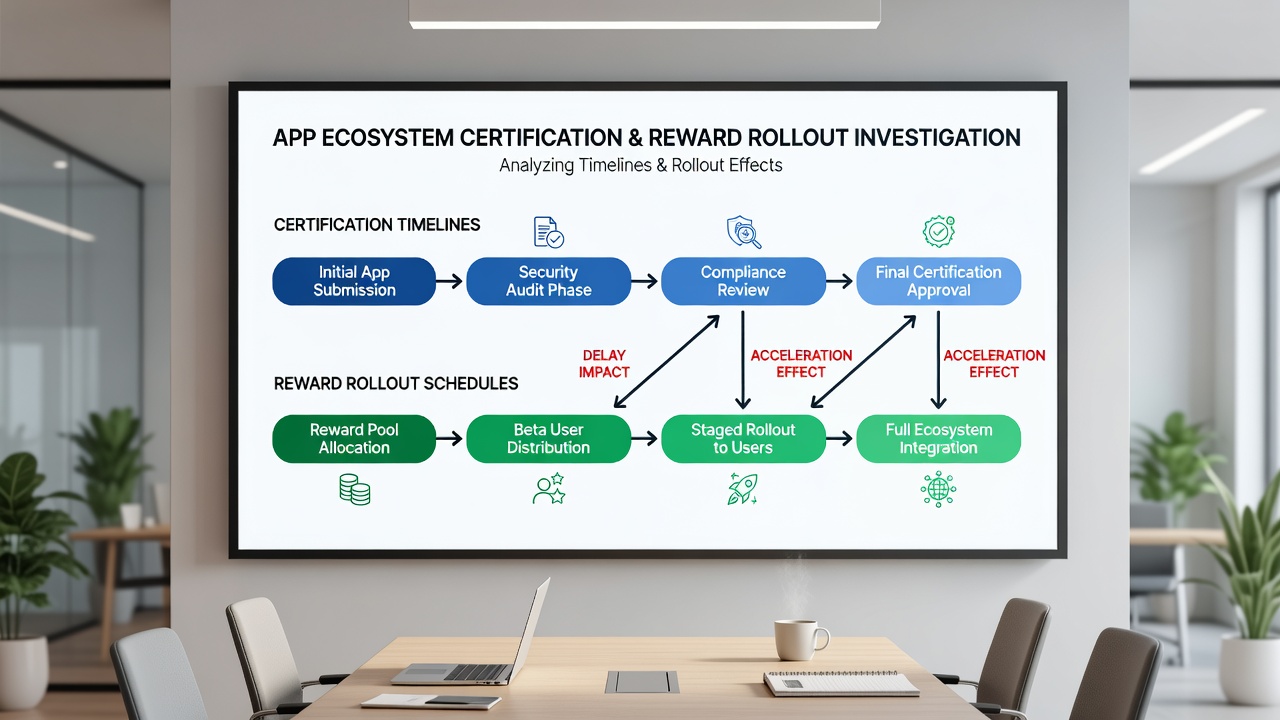
Once certification begins, reward rollout schedules shift because promotional content cannot activate until authorities grant final clearance. Developers therefore stage code releases in phases, locking bonus logic behind flags that remain disabled until approval arrives. In practice this creates predictable lag between iOS and Android submissions, since each platform store applies its own review on top of gaming-specific certification. Observers note that delays compound when multiple jurisdictions require simultaneous validation, as occurs with operators serving both German and Swedish users from a single code base.
October 2026 Regulatory Milestone
Updated technical requirements scheduled for October 2026 introduce additional verification layers focused on real-time monitoring of reward distribution algorithms. National regulators plan to mandate submission of updated audit trails that track how promotional credits interact with session limits and deposit caps. Operators must therefore incorporate these reporting functions into existing app frameworks ahead of the deadline, which extends current certification queues and pushes planned reward campaigns into subsequent quarters.
Research from the University of Malta’s gaming studies unit shows that similar past regulatory shifts produced measurable compression of reward variety, with operators reducing the number of concurrent promotions by approximately thirty percent to stay within revised approval windows. The pattern suggests that post-October 2026 schedules will favor simpler reward structures that pass review faster over complex multi-stage campaigns.
Cross-Market Comparisons and App Ecosystem Effects
Markets with centralized certification portals, such as the Netherlands, record shorter average timelines than those relying on decentralized laboratory networks. Operators active across several European countries maintain separate build branches to accommodate differing clock speeds, which increases maintenance overhead yet preserves the ability to launch rewards in faster jurisdictions first. Figures released by the Swedish Gambling Authority reveal that certified reward features reach production an average of nine days sooner in Sweden than in Germany for comparable app updates, illustrating how procedural differences translate into competitive timing advantages.
Payment gateway modifications tied to reward funding sources undergo parallel certification, further lengthening the critical path. When a new deposit method supports instant bonus crediting, both the gateway and the reward logic require joint validation before users see the option inside the app. This interdependence means a single delayed component stalls the entire promotional schedule.
Conclusion
Certification timelines function as fixed constraints within European gaming app ecosystems, directly dictating when operators can activate new reward mechanisms. Upcoming requirements effective October 2026 will lengthen these intervals for many participants, prompting adjustments in feature design and release sequencing. Regulatory data and laboratory statistics demonstrate consistent relationships between approval duration and rollout pacing across multiple jurisdictions, confirming that certification remains the central bottleneck for reward deployment in regulated markets.