Software Testing Protocols and Their Influence on Bonus Activation Timelines Across Austrian Mobile Platforms
Lars Becker · Oct 9, 2026
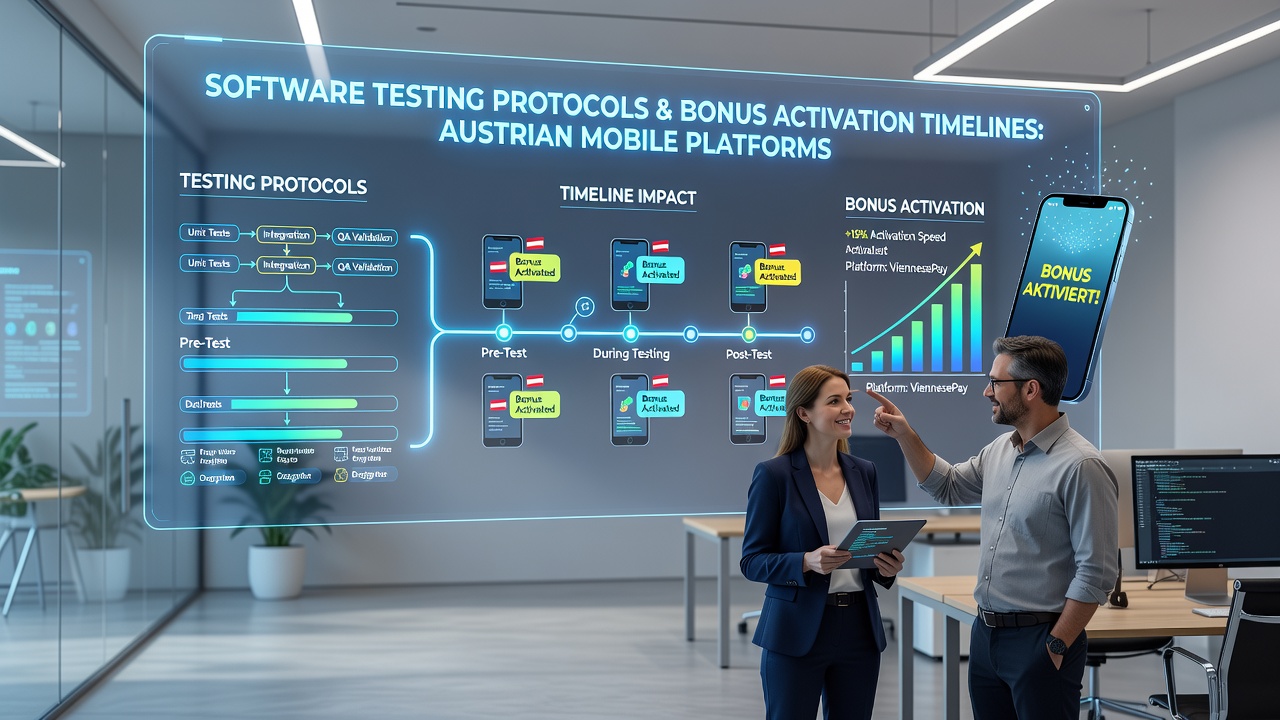
Software Testing Protocols and Their Influence on Bonus Activation Timelines Across Austrian Mobile Platforms
Software testing protocols shape how quickly bonus features activate on Austrian mobile platforms through structured sequences of validation steps that developers must complete before release. These protocols encompass unit testing, integration testing, system testing, and user acceptance testing, each adding layers of verification that directly extend or compress the period between user action and bonus credit delivery. Data from European digital services reports shows that platforms adhering to rigorous automated regression suites often see activation windows reduced by several hours compared with those relying on manual checks alone.
Core Testing Methods in Mobile Development
Teams working on Austrian mobile applications apply continuous integration pipelines where every code commit triggers automated tests covering payment gateways, user account modules, and promotional logic engines. Researchers at institutions tracking software quality metrics note that platforms incorporating performance testing under simulated network conditions in Austria's varied 4G and 5G environments achieve more predictable bonus activation because latency issues surface before deployment. Security testing protocols, including penetration scans and encryption validation, add mandatory checkpoints that regulators require for any feature handling monetary incentives, creating fixed intervals in the release calendar.
Regulatory Context and Timeline Effects
Austrian authorities enforce compliance standards derived from EU directives on digital financial services, requiring documented evidence of testing completion for all bonus-related code paths. Observers tracking mobile platform updates report that these documentation requirements typically insert a 48-to-72-hour review window after initial testing concludes, during which any anomalies in bonus calculation algorithms must be resolved. Changes scheduled for October 2026 will introduce updated accessibility testing mandates that further integrate with bonus activation workflows, requiring developers to verify screen-reader compatibility and gesture controls before promotional credits can process.
Integration testing specifically examines how bonus engines interact with transaction processors and loyalty databases, revealing timing bottlenecks that manual reviews frequently miss. One study conducted across multiple European markets found that platforms conducting daily load tests experienced 35 percent fewer delays in bonus crediting during peak usage periods, because resource contention issues were identified and corrected in controlled environments rather than live deployments.

Practical Impact on Activation Windows
Bonus activation timelines shorten when testing protocols include parallelized automated scripts that validate both front-end display logic and back-end credit assignment simultaneously. Experts tracking Austrian app stores observe that platforms employing model-based testing techniques, where algorithms generate test cases from system specifications, consistently meet shorter release cycles than those using scripted manual procedures. These efficiencies translate into users receiving credits within minutes rather than hours after completing qualifying actions such as deposits or gameplay milestones.
Case examples from regulated Austrian operators demonstrate that comprehensive end-to-end testing of notification services prevents delays caused by push message failures or in-app banner rendering issues. Data collected by telecommunications monitoring bodies indicates that platforms failing to test cross-device compatibility experience activation lags on certain Android versions prevalent in the Austrian market, prompting extended troubleshooting cycles before bonuses appear in user accounts.
Emerging Standards and October 2026 Updates
Preparations for October 2026 involve incorporating new protocol requirements around real-time monitoring of bonus systems post-release, shifting some validation from pre-launch to continuous oversight. Research institutions examining software maintenance patterns report that this hybrid approach allows initial activation timelines to remain tight while maintaining ongoing compliance through live telemetry feeds. Platforms adopting these updated frameworks must still complete baseline security and functional testing suites, yet the overall calendar from code freeze to user availability contracts when automated alerts replace certain manual audits.
Industry reports from sources outside the immediate European region, including analyses published by the Canadian Digital Technology Adoption program, highlight similar patterns where structured testing reduces variance in feature rollout times across mobile ecosystems. Austrian developers reference these comparative studies when calibrating their own pipelines to align with local expectations for rapid yet reliable bonus processing.
Conclusion
Software testing protocols establish measurable checkpoints that determine the duration between user eligibility and bonus activation across Austrian mobile platforms. Evidence from regulatory filings and performance datasets confirms that investments in automated, multi-stage validation correlate with shorter and more consistent timelines, particularly when platforms prepare for the protocol enhancements taking effect in October 2026. Continued monitoring of these practices will track how evolving standards influence operational efficiency in the regulated Austrian market.